Search across 886 pages

Try a tool name, category, or "lifetime deal"

30+ Best Places to Launch Your Product in 2026 (Ranked by Domain Rating)

Best places to launch your product, SaaS, and AI tool in 2026

TL;DR: The best places to launch your product in 2026 are the platforms that combine real audience reach with a strong Domain Rating (DR), so you get both early adopters and a permanent SEO backlink. I ranked 37 launch platforms by Ahrefs DR, from Reddit (DR 95) down to Launching Next (DR 50), and noted exactly who each one is for, what it costs, and where it falls short. Product Hunt, Reddit, and the big software directories sit at the top, but the right launch sequence depends on whether you are shipping a SaaS, an AI tool, or a physical product.

I have launched and watched founders launch a lot of products, from a scrappy SaaS to an AI tool to a physical gadget. So when someone asks me “where do I launch my product,” “where do I launch my SaaS,” or “where do I launch my AI tool,” the honest answer is the same: it depends on your product and your audience, and most “places to launch your product” lists are too lazy to tell you that. They give you 15 names, no context, no pricing, and no idea which ones actually move the needle in 2026. This one is different.

I pulled the live Ahrefs Domain Rating for every single platform on this list using the official Ahrefs API, so the ranking is not my opinion, it is data. DR matters because a launch on a high-DR site is two wins in one: traffic from real humans on launch day, plus a backlink that keeps feeding your SEO for years after the launch buzz dies. A featured slot on a DR 91 directory is worth more long-term than a one-day spike on a site Google has never heard of.

Here is what you get for each of the 37 platforms: what it actually does, who it is best for, an honest assessment, the real limitations, clear positives and negatives, and pricing. Two entries break the pure DR order on purpose, and I tell you exactly why below. Let’s get into it.

The cheapest launch is still expensive if nobody who matters is watching. Alston Antony

How I Ranked These Launch Platforms (And the Two Exceptions)

I ranked every platform by its current Ahrefs Domain Rating, highest first, fetched live from the Ahrefs Domain Rating API on June 18, 2026. DR runs from 0 to 100 and measures the strength of a site’s backlink profile. A higher DR means a link from that site passes more authority to yours, and it usually correlates with a bigger, more established audience. You do not have to take my numbers on faith, you can plug any of these domains into our free domain rating checker and confirm the DR yourself in seconds.

Two entries sit higher than their raw DR would place them, and I want to be upfront about that instead of pretending the math worked out conveniently:

  • zplatform.ai sits at #3 even though its DR is 53. This is my own platform, so I am telling you plainly: it is here because it is built specifically for AI tool and SaaS deal launches, not because it out-muscles Reddit on backlinks. I show its real DR right in its section. Judge it on fit, not on my placement.
  • SaaSPirate sits inside the top 20 at a DR of 68. It is a community I work closely with, so the same disclosure applies. It earns a top-20 spot on audience quality for lifetime deal launches, and I show the real number so you can decide for yourself.

Everything else is in strict DR order. No other thumbs on the scale. If a tool’s DR is shown next to its name and it looks out of place, that is the honest data, not a typo.

Disclosure: zplatform.ai is my platform (Asset-Owned). SaaSPirate is a community I am part of (Community Verified). Some outbound links may be affiliate or referral links. None of that changes the DR numbers, which come straight from Ahrefs.

Want the short version before you read all 37? Skim the comparison table next, then jump to the sections that match your product type.

Comparison Table: 37 Best Places to Launch Your Product (by Domain Rating)

#PlatformDRBest forCost to launch
1Reddit95Raw, honest feedback from niche communitiesFree
2Product Hunt91The classic launch-day spike for tech and AIFree
3zplatform.ai53AI tool and SaaS deal launchesFree to submit
4G291B2B SaaS buyer intent and reviewsFree listing
5Capterra91SMB software buyers ready to purchaseFree listing
6Crunchbase91Investor and press visibilityFree / paid
7Hacker News91Developer tools and technical productsFree
8Dev.to90Developer-focused launches and write-upsFree
9Software Advice87Guided SMB software recommendationsFree listing
10Wellfound87Startup hiring and investor reachFree
11HackerNoon87Tech storytelling and launch articlesFree / paid
12GetApp85Business app discovery and reviewsFree listing
13TrustRadius84Enterprise software buyer researchFree listing
14AppSumo83Lifetime deals and instant revenueRev-share
15F6S83Founder programs, accelerators, dealsFree
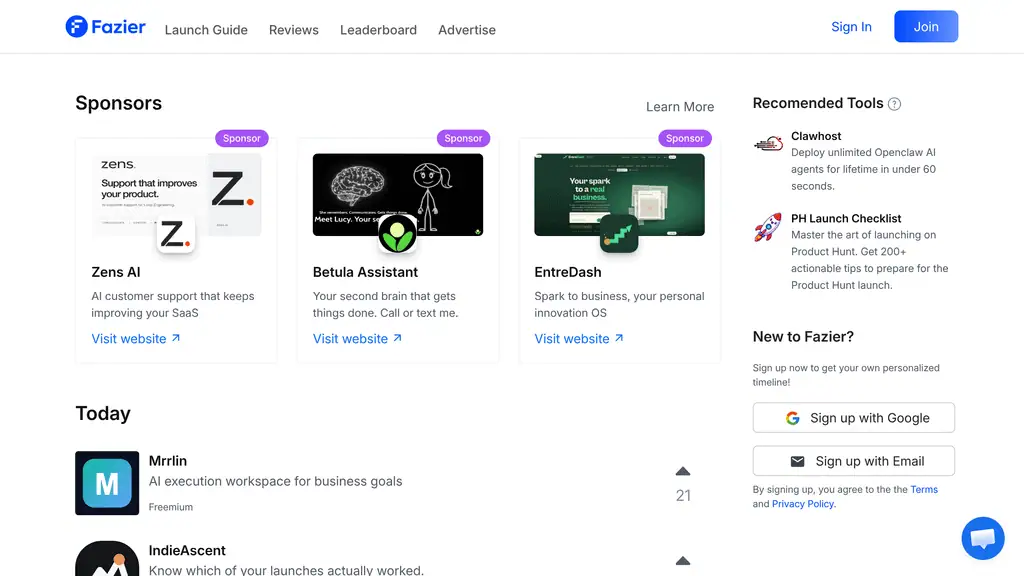
16Fazier82A modern Product Hunt alternativeFree / paid
17Indie Hackers81Bootstrapped founder communityFree
18AlternativeTo79“Alternative to X” discovery trafficFree / paid
19SaaSPirate68Lifetime deal launches to deal huntersFree / paid
20SaaSHub79SaaS discovery and alternativesFree / paid
21There’s An AI For That77AI tool discovery, huge AI audienceFree / paid
22BetaList76Pre-launch and early-stage startupsFree / paid
23Peerlist76Developer and maker launchesFree
24SaaSWorthy75SaaS category listings and reviewsFree / paid
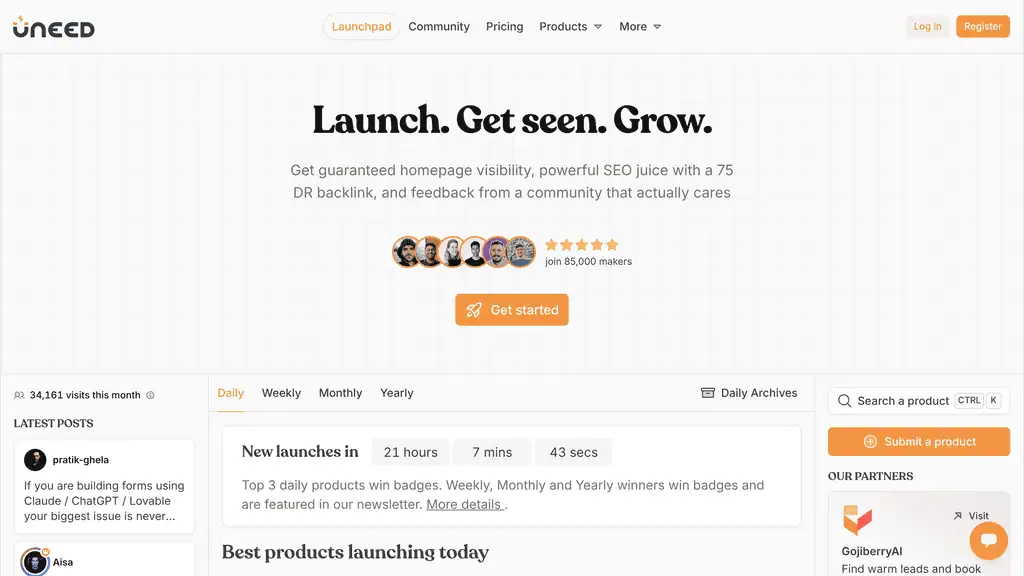
25Uneed74Indie maker launches with fast queueFree / paid
26Toolify73AI tool directory with global trafficFree / paid
27StackSocial73Consumer software and app dealsRev-share
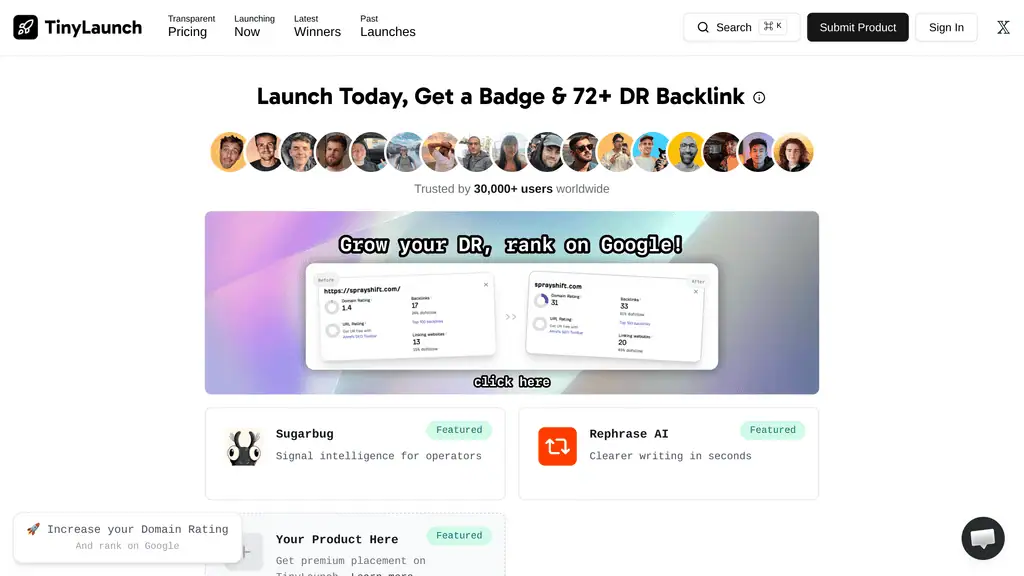
28TinyLaunch72Same-day indie launchesFree / paid
29Futurepedia72One of the largest AI tool directoriesFree / paid
30KillerStartups71Startup PR and directory exposureFree / paid
31Slant70Crowdsourced product recommendationsFree
32SideProjectors70Side projects and project salesFree
33Startup Stash65Curated startup resource directoryFree / paid
34DevHunt61Developer tool launchesFree
35Dealify59SaaS and AI lifetime dealsRev-share
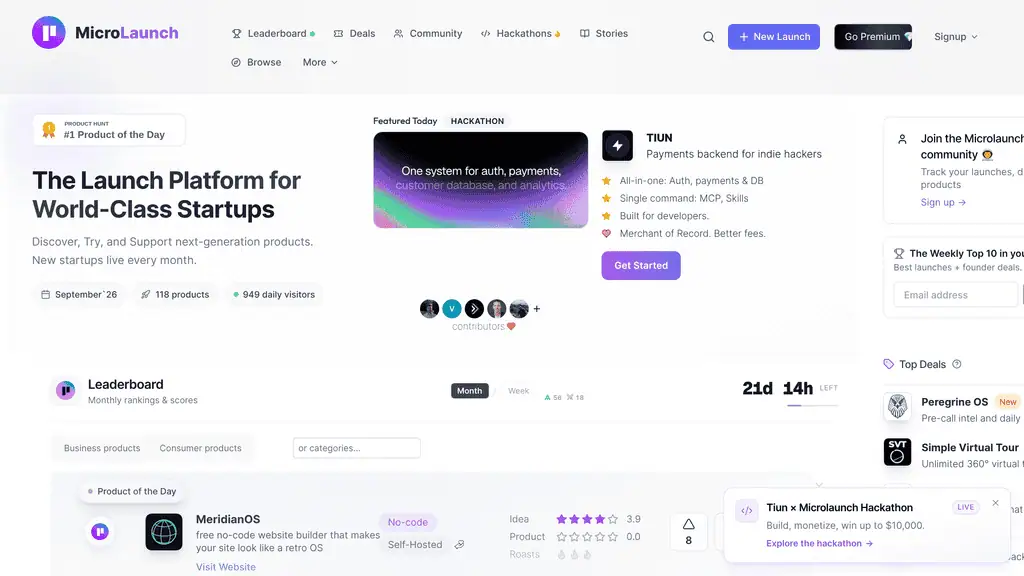
36MicroLaunch58Indie and micro-SaaS launchesFree / paid
37Launching Next50Startup directory listingsFree / paid

★ = placed by editorial relevance, not raw DR. Real DR shown. See the section above for why.

Now the full breakdown. Every platform gets its own section so you can decide where your product actually belongs.

1. Reddit (DR 95)

Reddit r/SaaS community feed where founders launch products and get feedback

One-line verdict: The highest-authority place to launch, and the most brutal, so use it for honest feedback before you polish the pitch.

Reddit is a network of communities (subreddits) for almost every topic, and several of them are full of your exact buyers. For a product launch, the ones that matter most are r/SaaS, r/SideProject, r/startups, r/Entrepreneur, and whatever niche subreddit your target audience already lives in. You post, the community votes and comments, and the threads that resonate can drive thousands of visitors in a day.

I tell founders to treat Reddit as a feedback engine first and a launch channel second. When a maker named Priya posted her invoicing tool in r/SaaS as a genuine “here is what I built, tear it apart” thread, she got 40 comments in an afternoon, half of them harsh, and three of those harsh comments became her first paying customers once she fixed what they flagged. That only happened because she asked for criticism instead of upvotes.

Honest assessment: Reddit gives zero patience to marketers. Drop a promo link in a community where you have no history and you will get downvoted into invisibility or banned. You need real karma, real participation, and a post that reads like a human sharing, not a press release.

Best for: Founders who want raw, honest early adopters feedback and have the thick skin to handle it.

  • Positives: DR 95, enormous reach, genuinely useful feedback, free, niche communities for every product type.
  • Negatives: Self-promotion is policed hard, most links are nofollow, requires real community standing, easy to get banned.
  • Pricing: Free. Reddit Ads exist if you want paid reach.

Pair a Reddit feedback round with a deeper plan from our Buy / Wait / Skip AI tool guide so you launch with conviction, not guesswork.

2. Product Hunt (DR 91)

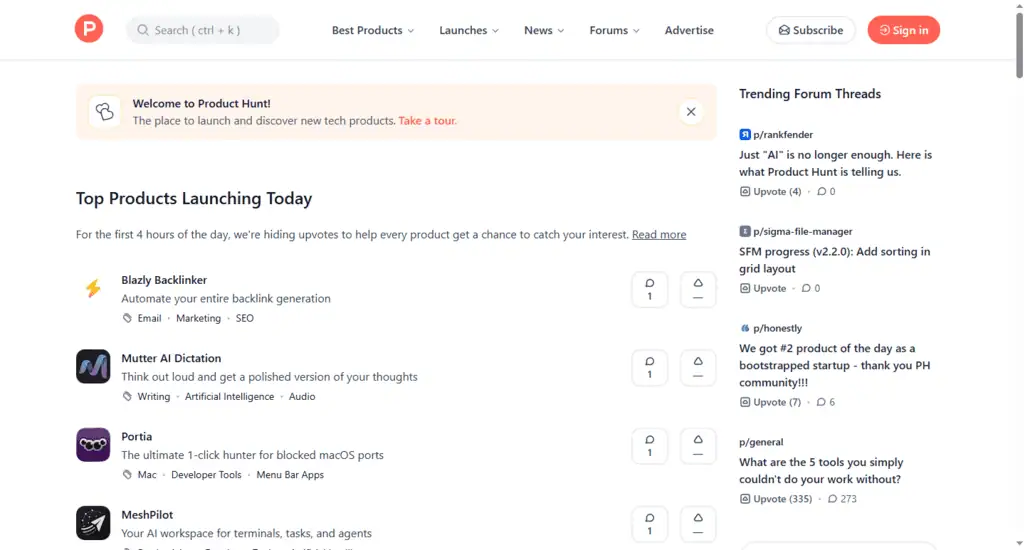
Product Hunt homepage showing the daily product launch leaderboard

One-line verdict: Still the iconic product launch stage in 2026, best for tech, SaaS, and AI products with an audience ready to vote.

Product Hunt is the platform where makers launch new products on a specific day, and the community upvotes the ones it likes. Finish near the top of the daily leaderboard and you get a flood of traffic, newsletter features, press attention, and a DR 91 backlink. It is the first name almost everyone thinks of when they picture places to launch.

The catch in 2026 is that launch day is competitive. The products that win are not the best ones, they are the best-prepared ones. When a founder named Marcus launched his AI meeting-notes tool, he spent two weeks lining up 50 supporters, scheduled the launch for 12:01 a.m. PST, and replied to every comment within minutes. He finished #2 of the day and pulled in 2,300 signups. A near-identical tool that launched cold the same week barely cracked 100.

Honest assessment: Is Product Hunt still worth it in 2026? Yes, but only if you prepare. Showing up unprepared on PH is the most common launch mistake I see, and it wastes a one-time shot at a huge audience.

Best for: Tech, SaaS, and AI startup founders who can mobilize early support on a single day.

  • Positives: DR 91, massive launch-day reach, press and investor eyes, strong newsletter distribution, free.
  • Negatives: Brutally competitive, rewards preparation over quality, traffic spikes then fades, link is nofollow.
  • Pricing: Free to launch.

3. zplatform.ai (DR 53) ★ Our Pick for AI Tools

zplatform.ai homepage showing tested AI tool deals and Buy Wait Skip verdicts

One-line verdict: The launch platform I built specifically for AI tools and SaaS deals, best when you want a buyer-intent audience instead of a one-day vanity spike.

Let me be straight, since this is my platform: zplatform.ai is here at #3 because of fit, not DR. Its DR is 53 and climbing, well below the giants above it. What it offers that they do not is a focused audience of people who are actively looking for AI tools and deals to buy, plus a Buy / Wait / Skip review model that puts your product in front of buyers, not just browsers. You can submit your AI tool and get listed alongside tested, curated deals.

The reason I send AI founders here first is intent. A spot in a giant directory buries you among 10,000 tools. A spot on a curated platform built around AI deals and honest verdicts means the people who see your listing are already in buying mode. For an early-stage AI SaaS, ten buyers beat a thousand tire-kickers.

Honest assessment: zplatform.ai will not give you Reddit’s reach or Product Hunt’s launch-day fireworks. It is a younger platform. If you want pure volume, launch on the DR 91 sites too. Use ZPlatform when your product is an AI tool or has a deal angle and you want qualified eyes.

Best for: AI tool and SaaS founders with a deal, discount, or lifetime deal angle who want buyer-intent traffic.

  • Positives: AI and deal-focused audience, honest Buy / Wait / Skip positioning, free to submit, growing DR, no lost-in-the-crowd problem.
  • Negatives: Lower DR than the legacy platforms, smaller raw traffic, best fit is AI and SaaS deals rather than every product type.
  • Pricing: Free to submit your tool.

Browse the best AI lifetime deals to see the kind of buyer audience your launch would reach here.

4. G2 (DR 91)

G2 homepage, the largest B2B software review platform for buyers

One-line verdict: The B2B review giant, best for SaaS products that win on buyer trust and want high-intent comparison traffic.

G2 is the largest B2B software review site, and buyers use it at the bottom of the funnel when they are deciding what to actually purchase. Getting your SaaS listed and collecting genuine reviews puts you in category pages, “best of” grids, and comparison searches that capture people ready to buy. It is less a launch-day event and more a permanent foundation.

I treat G2 as a long game. You will not get a spike the day you list, but six months of steady reviews can land you in the “High Performer” grid for your category, and that badge converts. One agency I know attributes a third of its inbound demos to a single G2 category page.

Honest assessment: G2 rewards products with real users and real reviews. If you are pre-launch with no customers, this is not your day-one move. Come back once you have 10 to 20 happy users who will leave honest reviews.

Best for: B2B SaaS with existing users and a category to dominate.

  • Positives: DR 91, pure buyer intent, evergreen comparison traffic, strong trust signal, free listing.
  • Negatives: Needs real reviews to matter, slow to build, paid tiers get expensive, not a pre-launch tool.
  • Pricing: Free listing; paid profiles and lead programs cost more.

5. Capterra (DR 91)

Capterra homepage, the Gartner-owned SMB software directory

One-line verdict: The SMB software directory owned by Gartner, best for products targeting small business buyers comparing options.

Capterra is a directory of software organized by category, used heavily by small and mid-size businesses to shortlist tools before buying. Like G2, it is buyer-intent traffic rather than a launch spike, and a listing earns you a DR 91 association plus visibility in category and comparison pages.

The pay-per-click model is where founders need to be careful. Capterra listings are free, but the prominent placements run on a bidding system, and costs add up fast in competitive categories. Start with the free listing, collect reviews, and only test paid placement once you know your numbers.

Honest assessment: Capterra and platforms like it are about steady discovery, not fireworks. If your buyer is a small business owner comparing five tools in a spreadsheet, you need to be one of the five.

Best for: SMB-focused software with a clear category.

  • Positives: DR 91, strong SMB buyer intent, Gartner-owned trust, free listing, evergreen.
  • Negatives: Paid placement bidding gets pricey, slow burn, needs reviews, not for pre-launch.
  • Pricing: Free listing; pay-per-click placements optional.

6. Crunchbase (DR 91)

Crunchbase homepage for company, funding, and startup data

One-line verdict: The company-data platform investors and press use, best for startup visibility beyond just users.

Crunchbase tracks companies, funding, founders, and news. A complete, well-maintained profile gets your startup in front of investors, journalists, and partners who research the space. It is less about a product launch and more about establishing that your company exists, is funded or fundable, and is worth a conversation.

I tell founders to claim and complete their Crunchbase profile early, even pre-revenue. When a journalist or angel hears your name and searches it, a thin or missing profile reads as “not serious.” A complete one with a clear description and any traction signals does quiet credibility work around the clock.

Honest assessment: Crunchbase will not send you customers. It sends you legitimacy and the occasional investor or press inquiry. Treat it as infrastructure, not a traffic channel.

Best for: Startups that want investor, press, and partnership visibility.

  • Positives: DR 91, investor and press reach, credibility signal, free tier, evergreen.
  • Negatives: Not a customer-acquisition channel, premium data tiers are expensive, no launch-day spike.
  • Pricing: Free profile; paid Pro tiers for data access.

7. Hacker News (DR 91)

Hacker News front page where developers launch with Show HN posts

One-line verdict: The developer-and-founder front page, best for technical products that can survive a smart, skeptical crowd.

Hacker News (HN), run by Y Combinator, is a social news site where the tech community votes on stories. Post your launch with the Show HN prefix and, if it resonates, you hit the front page and reach hundreds of thousands of developers, founders, and investors. The DR 91 and the audience quality are both elite.

HN is famously unforgiving. The community values substance, hates marketing speak, and will dissect your technical choices in the comments. When a developer posted “Show HN: I built an open-source alternative to X,” the top comment was a teardown of his architecture, and his honest reply about the tradeoffs is what actually won the thread and the front page.

Honest assessment: Hacker news rewards genuinely interesting technical work and punishes fluff. You launch once, so make it count. If your product is not technical or you cannot handle public critique, this is not your channel.

Best for: Developer tools, open-source projects, and technically deep products.

  • Positives: DR 91, huge technical audience, investor and press reach, free, lasting front-page traffic.
  • Negatives: Harsh community, one launch only, no marketing tolerance, hard to predict what hits.
  • Pricing: Free.

8. Dev.to (DR 90)

Dev.to homepage, a developer community for publishing and launches

One-line verdict: A developer community and publishing platform, best for launching through a well-written technical story.

Dev.to is a community where developers publish articles, tutorials, and project write-ups. You do not “submit a product” so much as tell the story of building it. A genuinely useful post about how you solved a hard problem, with your product launch woven in naturally, can reach the dev community and earn a DR 90 backlink.

The mechanism that works here is teaching, not pitching. A founder who wrote “How I built a real-time sync engine in Rust” and mentioned his product as the thing he built it for got 12,000 reads and a steady trickle of technical signups for months. A “check out my new app” post would have died.

Honest assessment: Dev.to is a content play, not a one-click launch. It rewards writers. If you can explain something technical clearly, it is a great evergreen channel. If you cannot, skip it.

Best for: Developer-facing products with a founder who can write.

  • Positives: DR 90, engaged developer audience, evergreen content, free, dofollow potential on quality posts.
  • Negatives: Requires real writing effort, not a fast launch, pure promo gets ignored.
  • Pricing: Free.

9. Software Advice (DR 87)

Software Advice homepage offering guided SMB software recommendations

One-line verdict: A Gartner-owned advisory directory, best for SMB software that benefits from guided buyer recommendations.

Software Advice connects business buyers with software through a guided recommendation model, often with a human advisor in the loop. A listing puts your product into curated shortlists sent to buyers who have described exactly what they need. It shares data and DNA with Capterra and GetApp under the Gartner umbrella.

This is high-intent, low-volume traffic. The buyers who come through Software Advice are deep in the decision process, which is exactly why the leads convert better than cold traffic even though there are fewer of them.

Honest assessment: Like the other Gartner properties, this is a buyer-intent directory, not a launch event. Worth a free listing for any SMB software; the value compounds as you collect reviews.

Best for: SMB and mid-market software in a defined category.

  • Positives: DR 87, guided high-intent leads, Gartner trust, free listing.
  • Negatives: Lower volume, lead programs cost money, slow burn, B2B only.
  • Pricing: Free listing; paid lead generation optional.

10. Wellfound (DR 87)

Wellfound homepage, the startup hiring and investor network

One-line verdict: The startup network formerly known as AngelList Talent, best for reaching the startup, talent, and investor crowd.

Wellfound is where startups hire and where the startup community hangs out. A company profile gets you in front of operators, potential hires, and investors who browse the platform. For a startup launch, it doubles as a recruiting and credibility channel more than a customer pipeline.

The founders who get the most from Wellfound use it for the talent-and-network flywheel: a strong profile attracts good early hires, good hires build a better product, and the whole thing feeds your launch story.

Honest assessment: Wellfound is not going to flood you with users. Its value is the startup ecosystem itself: hiring, networking, and investor adjacency. List there, keep it current, but do not expect a traffic spike.

Best for: Funded or fundable startups focused on hiring and ecosystem visibility.

  • Positives: DR 87, startup and investor reach, doubles as recruiting, free.
  • Negatives: Weak for direct customer acquisition, audience skews to operators not buyers.
  • Pricing: Free for company profiles.

11. HackerNoon (DR 87)

HackerNoon homepage, a tech publishing platform for launch stories

One-line verdict: A tech publishing platform, best for launching through a featured story that reaches a broad tech readership.

HackerNoon publishes technology stories from a large contributor base and has a sizable built-in readership. Publishing a strong launch story, founder journey, or technical deep-dive earns you exposure to a general tech audience plus a DR 87 backlink.

It sits between Dev.to and a traditional publication. You get editorial reach without needing a journalist to pick you up, as long as your piece clears their quality bar.

Honest assessment: Like other content channels, HackerNoon rewards a real story over a thin pitch. Paid distribution exists if you want a guaranteed push, but a genuinely good article often does fine on its own.

Best for: Tech products with a story worth telling and a founder who can write or commission writing.

  • Positives: DR 87, broad tech readership, editorial reach, evergreen.
  • Negatives: Needs quality writing, paid promotion to guarantee reach, not a one-click submission.
  • Pricing: Free to publish; paid distribution available.

12. GetApp (DR 85)

GetApp homepage for business app discovery and comparison

One-line verdict: Another Gartner directory, best for business app discovery and capturing comparison traffic.

GetApp is a business software directory focused on app discovery and comparison, sharing the Gartner backend with Capterra and Software Advice. One well-built listing across these properties multiplies your buyer-intent visibility, since reviews and data often syndicate between them.

The smart move is to treat Capterra, GetApp, and Software Advice as one project: claim all three, keep them consistent, and funnel review requests to whichever one ranks best for your category.

Honest assessment: Diminishing returns if you have already nailed Capterra, but the incremental effort is small and the DR 85 association is free. Worth doing.

Best for: SMB and business software already investing in the Gartner directory ecosystem.

  • Positives: DR 85, buyer-intent discovery, syndicated reviews, free listing.
  • Negatives: Overlaps heavily with Capterra, paid placement costs, slow burn.
  • Pricing: Free listing; paid options available.

13. TrustRadius (DR 84)

TrustRadius homepage with in-depth verified B2B software reviews

One-line verdict: An in-depth review platform, best for enterprise and mid-market software where buyers want detailed, verified reviews.

TrustRadius specializes in long, verified, detailed software reviews aimed at serious B2B buyers. The reviews go deeper than G2’s, which suits complex or enterprise products where a buyer wants real substance before committing budget.

Because the reviews are thorough and verified, they carry weight with cautious enterprise buyers. The tradeoff is that getting those detailed reviews takes more effort from your customers than a quick star rating.

Honest assessment: Best fit for enterprise and considered-purchase software. Overkill for a simple consumer app or a $9-a-month tool. If your sales cycle involves a committee, this belongs in your stack.

Best for: Enterprise and mid-market B2B software.

  • Positives: DR 84, deep verified reviews, enterprise buyer trust, free listing.
  • Negatives: Reviews take effort to collect, enterprise-skewed, paid tiers expensive.
  • Pricing: Free listing; paid programs for lead access.

14. AppSumo (DR 83)

AppSumo homepage, the biggest lifetime deal marketplace for software

One-line verdict: The biggest lifetime deal marketplace, best for getting instant revenue, users, and feedback in exchange for a discount.

AppSumo is not just a place to announce your product, it is a marketplace where you list a lifetime deal and AppSumo’s audience of deal hunters buys it. In exchange for offering a steep lifetime discount, you get a wave of paying customers, real usage, and feedback, often within days. I have written a full AppSumo review covering how the model works in practice.

Here is the founder objection I hear most: why give AppSumo a lifetime discount and make little money upfront instead of recurring revenue? Two reasons. First, you validate that people will actually pay for what you built. Second, you get an instant base of users to interview and improve from. For an early-stage SaaS, that validation is often worth more than the discounted dollars.

Honest assessment: AppSumo’s audience is deal hunters, not always your long-term ideal customer, and the revenue share plus lifetime pricing means thin margins. But for validation and a fast user base, few channels match it.

Best for: Early-stage SaaS that wants instant revenue, users, and validation.

  • Positives: DR 83, instant paying customers, real feedback, strong validation, big audience.
  • Negatives: Deep discount required, deal-hunter churn, revenue share, support load spikes.
  • Pricing: Revenue-share model; free to apply.

See how lifetime deal launches play out across platforms in our AI lifetime deals roundup.

15. F6S (DR 83)

F6S homepage connecting founders with accelerators, grants, and deals

One-line verdict: A founder-focused network for programs, accelerators, and deals, best for startups plugging into the funding and growth ecosystem.

F6S connects founders with accelerators, grants, jobs, and startup deals. Listing your startup gets you into a network oriented around growth programs and founder resources rather than direct consumer discovery. It overlaps with the accelerator-application world.

The value is access: founder programs, deal perks, and a profile that participates in the broader startup-support ecosystem. It is more useful for plugging into opportunities than for launch-day traffic.

Honest assessment: F6S is ecosystem infrastructure, not a customer channel. Useful if you are pursuing accelerators or founder programs, less so if you just want users today.

Best for: Early-stage founders pursuing accelerators, grants, and startup programs.

  • Positives: DR 83, accelerator and program access, founder deals, free.
  • Negatives: Not a direct customer channel, ecosystem-focused, low launch-day traffic.
  • Pricing: Free.

16. Fazier (DR 82)

Fazier homepage, a modern Product Hunt alternative with a launch leaderboard

One-line verdict: A fast-growing Product Hunt alternative, best for makers who want a launch leaderboard without PH’s saturation.

Fazier is a modern launch platform built around the familiar daily and weekly leaderboard model, and it has earned a surprisingly strong DR 82. Makers use it as a less-saturated stage to launch your product, collect upvotes, and earn a badge plus backlink.

It has become a favorite “second launch” destination for indie makers who already did Product Hunt and want another shot at a leaderboard-driven traffic bump without starting from zero.

Honest assessment: Smaller audience than Product Hunt, so temper expectations. But the DR is high for a newer platform and the crowd is friendlier, which makes it a smart complement rather than a replacement.

Best for: Indie makers and SaaS founders wanting a Product Hunt-style launch with less competition.

  • Positives: DR 82, leaderboard model, friendlier crowd, free tier, good for second launches.
  • Negatives: Smaller reach than PH, newer so less press attention.
  • Pricing: Free; paid featured options available.

17. Indie Hackers (DR 81)

Indie Hackers homepage, the bootstrapped founder community

One-line verdict: The bootstrapped founder community, best for products built by and for indie makers.

Indie Hackers is a community of bootstrapped and indie founders who share revenue numbers, lessons, and products. You can launch by posting your story, replying helpfully in threads, and submitting to the products directory. The audience is founders, which is perfect if you sell to founders.

The thing that works on Indie Hackers is transparency. A “here is how I got to $2k MRR and what I would do differently” post earns goodwill and clicks. A pure “check out my product” post earns silence. You also need karma before your links carry weight.

Honest assessment: If your buyer is not a founder or maker, the audience fit is weaker. And like every community, it punishes spam. Show up to contribute first.

Best for: Tools and products aimed at founders, makers, and bootstrappers.

  • Positives: DR 81, engaged founder audience, great for founder-targeted products, free.
  • Negatives: Narrow audience, needs genuine participation, link limits until you build karma.
  • Pricing: Free.

18. AlternativeTo (DR 79)

AlternativeTo homepage for discovering software alternatives

One-line verdict: A discovery site for software alternatives, best for capturing “alternative to [big competitor]” search traffic.

AlternativeTo lets users find alternatives to popular software. Listing your product as an alternative to a well-known incumbent taps into a stream of people actively shopping for a replacement, which is some of the highest-intent traffic you can get.

This is a long-term SEO and discovery play. When someone searches “alternative to [expensive tool],” your listing can be there at the exact moment they are looking to switch. That intent is gold.

Honest assessment: Slow to build momentum and you need real users to upvote your listing into relevance. But the buyer intent on “alternative to X” queries is hard to beat.

Best for: Products that compete directly with a known, expensive incumbent.

  • Positives: DR 79, high-intent “alternative to” traffic, evergreen discovery, free.
  • Negatives: Needs upvotes to rank, slow burn, works best if you have clear competitors.
  • Pricing: Free; paid promotion available.

19. SaaSPirate (DR 68) ★ Community Pick for Deal Launches

SaaSPirate homepage listing SaaS lifetime deals for deal hunters

One-line verdict: A deal-hunter community for SaaS and AI lifetime deal launches, placed in the top 20 for audience quality, not raw DR.

Full disclosure again: SaaSPirate sits here at #19 by editorial choice, and its real DR is 68. It is a community of digital entrepreneurs and deal hunters who actively want to buy SaaS and AI tools at a discount. For a lifetime deal or launch discount, that buyer intent is exactly what you want, which is why it earns a top-20 placement on fit.

The audience here has generated real money for founders who listed deals, because the people in it are buyers, not browsers. If your launch has a discount or lifetime deal angle, a community of people who hunt deals all day is a near-perfect match.

Honest assessment: SaaSPirate’s DR is lower than the platforms around it, and the audience is specifically deal hunters, so it is not a fit for full-price enterprise software. For a deal-driven launch to an engaged community, it punches above its DR.

Best for: SaaS and AI founders launching with a deal, discount, or lifetime offer.

  • Positives: Engaged buyer community, strong for lifetime deals, real conversion track record, free option.
  • Negatives: DR lower than neighbors, deal-hunter audience only, niche fit.
  • Pricing: Free submission; paid promotion available.

20. SaaSHub (DR 79)

SaaSHub homepage for SaaS discovery and alternatives

One-line verdict: A SaaS discovery and alternatives directory, best for steady, long-term discovery traffic.

SaaSHub is a software directory focused on SaaS discovery, alternatives, and comparisons. A listing earns you a DR 79 backlink and ongoing visibility to people researching tools in your category. It blends the directory and “alternatives” models.

It is a set-and-mostly-forget channel: list once, keep it accurate, and it quietly contributes discovery traffic and a solid backlink over time.

Honest assessment: Not a launch-day spike. It is evergreen infrastructure. Worth the listing for any SaaS, but do not expect fireworks.

Best for: Any SaaS wanting long-term discovery and a quality backlink.

  • Positives: DR 79, evergreen discovery, alternatives traffic, free listing.
  • Negatives: No launch spike, paid features to stand out, slow burn.
  • Pricing: Free; paid promotion available.

21. There’s An AI For That (DR 77)

There's An AI For That homepage, a large AI tool discovery directory

One-line verdict: One of the largest AI tool directories, best for AI tools that need to be found by the huge AI-curious audience.

There’s An AI For That (TAAFT) is among the most-visited AI tool directories on the web, with an audience that comes specifically to discover new AI tools. For an AI product, getting listed puts you in front of exactly the people hunting for what you built.

The traffic volume here is real, because the site itself ranks well and pulls in millions of AI-curious visitors. A listing rides that wave. Free submissions can sit in a long queue, and paid options jump the line.

Honest assessment: Fierce competition because every AI tool wants in, and the free queue is slow. But for sheer AI-buyer reach, it is one of the best AI-specific channels available.

Best for: AI tools of any category wanting maximum discovery.

  • Positives: DR 77, huge AI-specific audience, strong discovery, real traffic volume.
  • Negatives: Crowded, slow free queue, paid to stand out, AI-only.
  • Pricing: Free submission; paid featured and fast-track options.

22. BetaList (DR 76)

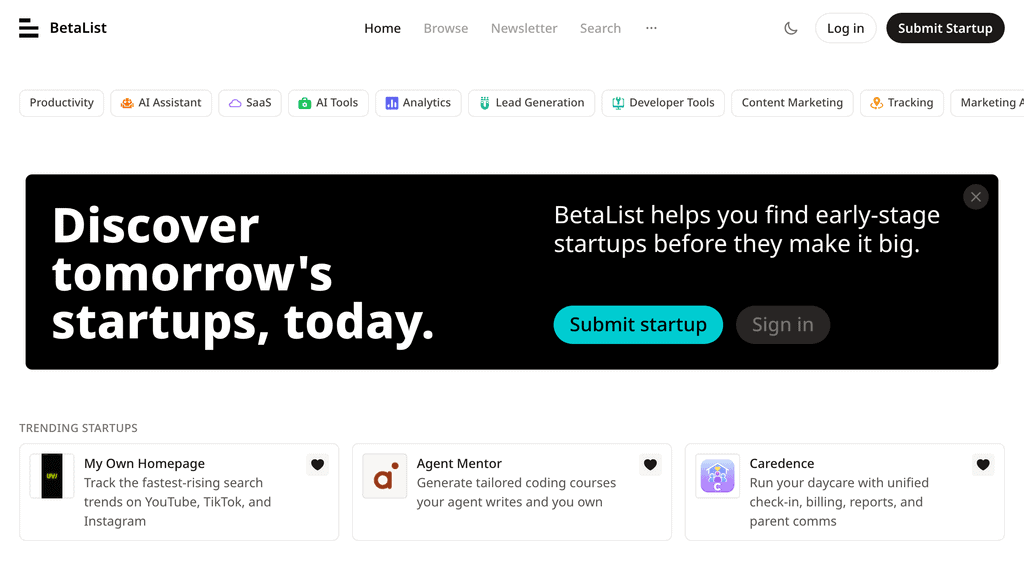
BetaList homepage showcasing pre-launch and early-stage startups

One-line verdict: A pre-launch startup directory, best for building an early-adopter waitlist before you fully ship.

BetaList showcases early-stage and pre-launch startups to an audience of early adopters and fellow founders. Submitting gets your startup featured to people who specifically enjoy discovering and trying brand-new products before everyone else.

This is the rare platform built for the pre-launch moment. If you are collecting a waitlist or want first testers before a Product Hunt push, BetaList fills your top of funnel with people predisposed to sign up. Point them at a clear landing page with a single signup field and you turn that curiosity into an email list you can mobilize on launch day.

Honest assessment: The free queue can take weeks, and paid skip-the-queue placement is the fast path. The audience skews to other makers and early adopters, not always end buyers.

Best for: Pre-launch and early-stage startups building a waitlist.

  • Positives: DR 76, early-adopter audience, perfect for pre-launch, waitlist building.
  • Negatives: Slow free queue, paid to skip, maker-heavy audience.
  • Pricing: Free with a queue; paid fast-track around $129 and up.

23. Peerlist (DR 76)

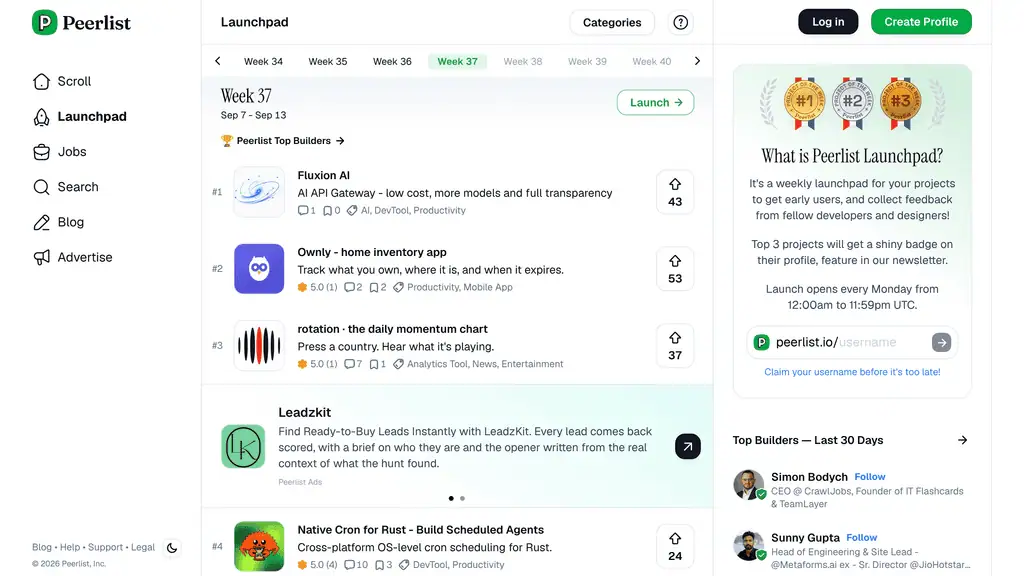
Peerlist homepage, a developer and maker network with a launchpad

One-line verdict: A professional network for developers and makers with a launch feature, best for tech products and personal-brand-led launches.

Peerlist is a professional network built for developers and makers, and its launch feature (Peerlist Launchpad) lets you ship products to a tech-savvy, supportive community. It blends a professional profile with a maker-launch leaderboard.

The community here is engaged and friendly, which makes it a comfortable place for a first launch or for developers who want to build a personal brand alongside their product. Upvotes and feedback come from people who actually understand the work.

Honest assessment: Smaller than Product Hunt and skewed to the developer-maker world. Great for that crowd, weaker if your buyer is a non-technical business user.

Best for: Developers and makers launching tech products.

  • Positives: DR 76, engaged maker community, supportive, free, doubles as a pro profile.
  • Negatives: Smaller reach, dev-skewed audience.
  • Pricing: Free.

24. SaaSWorthy (DR 75)

SaaSWorthy homepage listing and ranking SaaS products by category

One-line verdict: A SaaS listing and review directory, best for category visibility and comparison traffic.

SaaSWorthy lists and ranks SaaS products by category, with reviews and comparisons. A listing gets you into category pages and “top software” lists that buyers browse when shortlisting tools, plus a DR 75 backlink.

It works like the other discovery directories: evergreen visibility rather than a spike. The category and “best of” pages are where the value lives, since those rank and pull in researching buyers.

Honest assessment: Yet another directory, so prioritize it after the higher-DR ones unless your category is well-covered there. Low effort to list, modest steady return.

Best for: SaaS products wanting extra category listings and backlinks.

  • Positives: DR 75, category visibility, comparison traffic, free listing.
  • Negatives: Overlaps with other directories, slow burn, paid to feature.
  • Pricing: Free; paid options available.

25. Uneed (DR 74)

Uneed homepage, an indie maker launch platform with a fast queue

One-line verdict: A clean, fast-moving indie launch platform, best for makers who want a quick featured slot without a long wait.

Uneed is a popular Product Hunt alternative among indie makers, known for a simple submission process and a faster path to being featured than the older platforms. You submit your product, get a daily or featured slot, and earn traffic plus a DR 74 backlink.

It has become a go-to in the indie community precisely because it is low-friction. Makers who do not want to orchestrate a giant PH campaign can still get a real featured launch with minimal overhead.

Honest assessment: Smaller audience than the giants, so the traffic is modest. But the speed, simplicity, and friendly crowd make it one of the better lightweight launch options.

Best for: Indie makers and solo founders wanting a fast, low-effort launch.

  • Positives: DR 74, fast featuring, simple submission, friendly indie crowd.
  • Negatives: Smaller reach, paid to skip the queue or get premium placement.
  • Pricing: Free with a queue; paid fast-track and featured options.

26. Toolify (DR 73)

Toolify homepage, a large global AI tools directory

One-line verdict: A large AI tool directory with strong international traffic, best for AI tools targeting a global audience.

Toolify is a major AI tools directory that ranks well globally and pulls significant traffic from people browsing and comparing AI products. Listing your tool gets you category placement, ranking-list visibility, and a DR 73 backlink, with notable reach in non-US markets.

For AI founders who want international discovery, Toolify’s traffic mix is a genuine advantage. It complements the more US-centric directories nicely.

Honest assessment: It is a directory, so it lacks depth and the listing is one of many. But the global traffic is real, and for an AI tool it is worth claiming a spot.

Best for: AI tools wanting global and non-US discovery traffic.

  • Positives: DR 73, large AI audience, strong international traffic, free listing.
  • Negatives: Thin listing depth, crowded, paid to feature, AI-only.
  • Pricing: Free; paid featured placement available.

27. StackSocial (DR 73)

StackSocial homepage, a consumer software and app deal marketplace

One-line verdict: A consumer software and app deal marketplace, best for prosumer and consumer products that sell well at a discount.

StackSocial sells software, apps, courses, and gadgets at a discount to a large consumer audience. Like AppSumo, it is a marketplace: you list a deal, they sell it to their buyers, and you split revenue. The audience skews consumer and prosumer rather than B2B.

It is a strong fit for consumer-facing apps, utilities, and tools with broad appeal that convert well on a discount. For niche B2B SaaS, the audience match is weaker.

Honest assessment: Revenue share and discounting apply, same as any deal marketplace. The consumer skew means it is great for some products and a poor fit for others. Know your audience first.

Best for: Consumer and prosumer software and apps.

  • Positives: DR 73, large consumer audience, instant sales, deal-driven volume.
  • Negatives: Consumer skew, revenue share, discount required, weak for niche B2B.
  • Pricing: Revenue-share model.

28. TinyLaunch (DR 72)

TinyLaunch homepage for same-day indie product launches

One-line verdict: A same-day indie launch platform, best for makers who want to ship today without a queue.

TinyLaunch is built around fast, same-day launches for indie makers. The pitch is simplicity and speed: you can launch your product quickly, get a featured slot, and earn a DR 72 backlink without the long waits some platforms impose.

It is part of the wave of lightweight launch tools serving makers who launch often and want a quick, repeatable channel. Good for shipping side projects and small SaaS without ceremony.

Honest assessment: Modest reach and a newer platform, so the traffic is small. The value is speed and simplicity plus a decent backlink, not a massive audience.

Best for: Indie makers shipping fast and often.

  • Positives: DR 72, same-day launch, simple, good backlink for the size.
  • Negatives: Small audience, newer platform, paid options for visibility.
  • Pricing: Free; paid featured slots available.

29. Futurepedia (DR 72)

Futurepedia homepage, one of the largest AI tool directories

One-line verdict: One of the largest AI tool directories, best for AI products that want to be in the directory buyers check first.

Futurepedia is among the biggest and best-known AI tools directories, with a large audience that browses it to keep up with new AI products. A listing puts your tool in a heavily trafficked, well-organized catalog plus a DR 72 backlink.

For AI founders, being in Futurepedia is close to table stakes. Buyers and curious users browse it specifically to discover tools, so absence is a missed-discovery problem.

Honest assessment: Crowded and directory-shallow, like its peers. But the audience size and category organization make it one of the AI directories actually worth the submission effort.

Best for: AI tools of any category wanting directory discovery.

  • Positives: DR 72, large well-known AI audience, organized categories, free listing.
  • Negatives: Crowded, thin listing depth, paid to feature, AI-only.
  • Pricing: Free; paid featured and fast-track options.

30. KillerStartups (DR 71)

KillerStartups homepage featuring and reviewing new startups

One-line verdict: A startup PR and directory site, best for an extra exposure-and-backlink hit beyond the obvious channels.

KillerStartups features and reviews startups, blending directory listing with light PR-style coverage. A submission can earn you a write-up, directory placement, and a DR 71 backlink, giving you a bit of editorial flavor most pure directories lack.

It is a useful “round out the launch” channel: not your headline act, but a worthwhile extra placement that adds a backlink and a touch of third-party coverage.

Honest assessment: Reach is modest and paid placement speeds things up. Treat it as a supporting player in a broader launch, not a main event.

Best for: Startups wanting extra exposure and a backlink with light editorial coverage.

  • Positives: DR 71, light PR coverage, directory placement, backlink.
  • Negatives: Modest reach, paid to fast-track, supporting channel only.
  • Pricing: Free; paid featured options.

31. Slant (DR 70)

Slant homepage with crowdsourced product recommendations

One-line verdict: A crowdsourced recommendation site, best for products that win head-to-head “what is the best X” comparisons.

Slant answers “what is the best X for Y” through crowdsourced pros and cons. Getting your product added and upvoted in relevant questions puts you in front of people comparing options, with reasoning attached. It captures comparison intent in a structured way.

When your product shows up as a well-argued option in a “best tool for [task]” thread, the people reading are mid-decision. That context makes the traffic convert better than its volume suggests.

Honest assessment: Niche and slow to build, and you need community participation to get listed and upvoted. But the comparison intent is valuable for the right product.

Best for: Products that compete well on specific, comparable use cases.

  • Positives: DR 70, comparison intent, structured pros and cons, free.
  • Negatives: Niche, slow, needs upvotes and participation.
  • Pricing: Free.

32. SideProjectors (DR 70)

SideProjectors homepage, a marketplace to showcase and sell side projects

One-line verdict: A marketplace for side projects, best for launching, showcasing, or even selling a side project.

SideProjectors is a marketplace where makers list side projects to showcase, find collaborators, or sell. For a launch, it is a niche channel to put a side project in front of an audience of makers who appreciate and sometimes buy projects.

The unusual angle here is the buy-and-sell aspect. If your “launch” is really about finding the project a home or a co-founder, this is one of the few platforms designed for it.

Honest assessment: Small, specialized audience. Not a mainstream launch channel, but genuinely useful for the specific job of showcasing or selling a side project.

Best for: Makers launching, showcasing, or selling side projects.

  • Positives: DR 70, maker audience, can sell or find collaborators, free.
  • Negatives: Small niche audience, not for scaling a main product.
  • Pricing: Free.

33. Startup Stash (DR 65)

Startup Stash homepage, a curated directory of startup tools and resources

One-line verdict: A curated startup resource directory, best for tools and resources founders search for.

Startup Stash is a curated directory of startup tools and resources, browsed by founders looking for solutions to specific problems. Getting listed places your product among hand-picked resources, which carries a bit more trust than an open directory.

Because it is curated, inclusion is a small credibility signal, and the founder audience is well-targeted if you sell to startups.

Honest assessment: Modest traffic and the DR is lower than the leaders. Worth a submission if you sell to founders, but it is a supporting channel.

Best for: Tools and resources aimed at founders and startups.

  • Positives: DR 65, curated trust signal, founder audience.
  • Negatives: Modest traffic, paid to get featured, supporting role.
  • Pricing: Free; paid placement available.

34. DevHunt (DR 61)

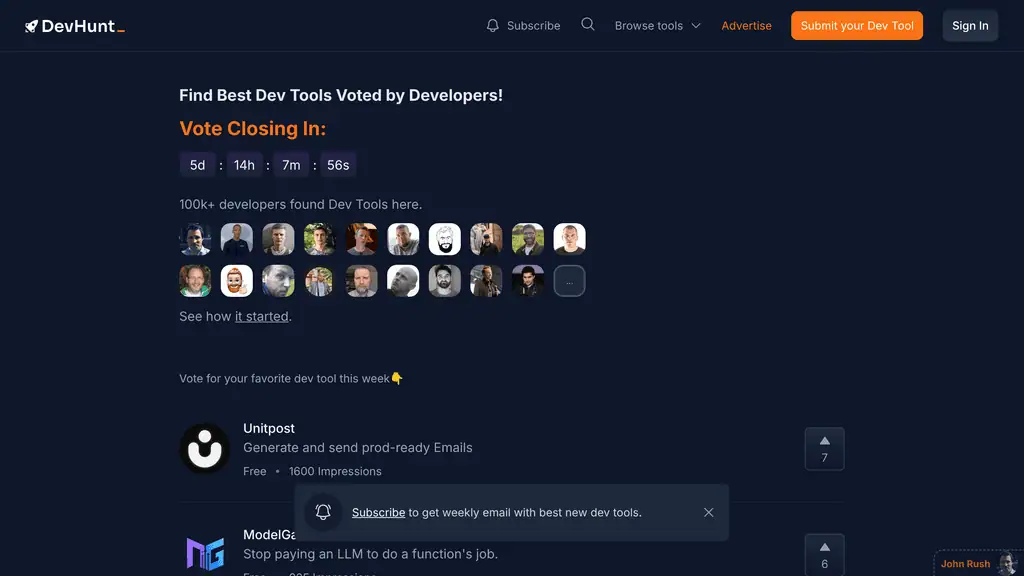
DevHunt homepage, a community launch platform for developer tools

One-line verdict: A community launch platform for developer tools, best for dev products wanting a focused, supportive launch.

DevHunt is a launch platform built specifically for dev tools, run by and for the developer community. It works like a focused Product Hunt for developer products: launch, collect upvotes, and reach an audience that exclusively cares about dev tooling.

The tight focus is the strength. Everyone browsing is a developer evaluating dev tools, so the audience match for a developer product is excellent even if the raw numbers are smaller.

Honest assessment: Lower DR and smaller reach than the big platforms. But for a developer tool, the audience purity makes it worth a launch slot.

Best for: Developer tools and technical products.

  • Positives: DR 61, pure developer audience, community-run, free.
  • Negatives: Smaller reach, dev-only, lower DR.
  • Pricing: Free.

35. Dealify (DR 59)

Dealify homepage with curated SaaS and AI lifetime deals

One-line verdict: A curated SaaS and AI lifetime deal marketplace, best for deal-driven launches to a growth-focused audience.

Dealify curates lifetime deals on SaaS, AI, and growth tools for an audience of marketers and founders hunting for deals. Like other deal marketplaces, you list a discounted offer and reach buyers ready to purchase at a lower price.

Its growth-and-marketing audience skew makes it a good match for tools in those categories. The curation also means a slightly more vetted environment than the largest open marketplaces.

Honest assessment: Smaller than AppSumo with the usual revenue-share and discount tradeoffs. A solid secondary deal channel, especially for growth and marketing tools.

Best for: SaaS and AI tools launching a lifetime deal, especially in growth and marketing.

  • Positives: DR 59, curated deal audience, growth-tool fit, instant sales.
  • Negatives: Smaller than AppSumo, revenue share, discount required.
  • Pricing: Revenue-share model.

36. MicroLaunch (DR 58)

MicroLaunch homepage, an indie and micro-SaaS launch platform

One-line verdict: An indie and micro-SaaS launch platform, best for small products and makers building in public.

MicroLaunch is a launch platform aimed at indie makers and micro-SaaS products, with a leaderboard model and a community that celebrates small wins. You launch your product, gather upvotes, and earn a backlink plus exposure to fellow makers.

It fits the build-in-public, ship-small crowd. The community is encouraging, which makes it a low-pressure place to test a launch before a bigger push.

Honest assessment: Small audience and modest DR. The value is community and a friendly first-launch environment more than serious traffic volume.

Best for: Indie makers and micro-SaaS founders.

  • Positives: DR 58, supportive indie community, leaderboard model, free.
  • Negatives: Small reach, lower DR, paid for premium visibility.
  • Pricing: Free; paid options available.

37. Launching Next (DR 50)

Launching Next homepage, a directory of new and upcoming startups

One-line verdict: A straightforward startup directory, best for an easy listing and a backlink.

Launching Next is a directory of new and upcoming startups. Submission is simple, and you get a profile plus a backlink. It is one of the older, no-frills startup directories that still quietly sends a trickle of discovery traffic.

There is not much strategy to it: submit, get listed, collect the backlink. It is a checkbox in a broad launch campaign rather than a destination.

Honest assessment: Low DR and low traffic. Worth the five minutes for the backlink and listing, but keep expectations small.

Best for: Startups doing a thorough directory-submission sweep.

  • Positives: DR 50, easy submission, free listing, backlink.
  • Negatives: Low traffic, low DR, minimal engagement.
  • Pricing: Free; paid featured options.

Where Is the Best Place to Launch a Product or Startup?

The best place to launch a product depends on your product type, but the highest-leverage combination in 2026 is Product Hunt for the launch-day spike, Reddit and Hacker News for honest feedback and technical reach, and two or three high-DR directories (G2, Capterra, or the AI directories) for evergreen discovery and backlinks. There is no single best platform, only the best sequence for your specific product.

Think about it in terms of two payoffs. Launch day payoff is the spike: votes, signups, and buzz from Product Hunt, Fazier, or Hacker News. The evergreen payoff is the backlink and ongoing discovery from directories like G2, AlternativeTo, or Futurepedia. A complete launch captures both. The spike gives you momentum and social proof; the directories keep feeding you traffic and SEO value long after the launch buzz fades.

How Do I Choose the Right Platform for My Product Launch?

Choose your launch platforms by matching three things: your product type, your audience, and the payoff you need most. A developer tool belongs on Hacker News, Dev.to, DevHunt, and Peerlist. An AI tool belongs on There’s An AI For That, Futurepedia, Toolify, and a focused platform like zplatform.ai (the same place I publish our tested AI tool roundups). A B2B SaaS belongs on G2, Capterra, and Product Hunt. A product with a deal angle belongs on AppSumo, SaaSPirate, or Dealify, all of which I break down in our tested AI deals hub.

Here is the simple filter I use. First, where does my buyer already hang out? Second, do I need fast validation (deal marketplaces, Reddit) or long-term discovery (directories)? Third, can I handle the audience’s culture, since Hacker News and Reddit will eat an unprepared marketer alive? Answer those three and your shortlist writes itself.

When a SaaS founder named Dana asked me where to launch her team-scheduling tool, the answer was not “everywhere.” It was Product Hunt for the spike, G2 and Capterra for buyer-intent discovery, and r/SaaS for feedback. Four platforms, sequenced, beat a scattershot blast across thirty.

How Many Platforms Should I Launch On?

Launch on as many relevant platforms as you can support, but sequence them instead of blasting all at once. Most founders should plan for a core of 5 to 10 platforms matched to their product, not all 37. Quality of fit beats quantity, and a staggered sequence lets you reuse momentum from one launch to fuel the next.

A practical sequence looks like this. Pre-launch: build a waitlist on BetaList and submit to low-effort directories for early backlinks. Feedback phase: post in Reddit and Indie Hackers to gather input and fix issues. Launch day: go big on Product Hunt, then Hacker News if you are technical. Deal phase: list on AppSumo, SaaSPirate, or Dealify if a lifetime deal fits. Evergreen: keep your G2, Capterra, and category directory listings current forever. Spreading launches out also means you are not burning every channel in a single day you cannot repeat.

How Can I Build an Audience Before Launching Your Product?

Build a pre-launch audience by sharing your progress publicly before you have anything to sell. Building in public on X (Twitter) and LinkedIn, collecting a waitlist through BetaList, and participating genuinely in communities like Indie Hackers and Reddit all create a base of early adopters who will show up on launch day and give you the early votes that high-leverage platforms reward.

The mechanism is simple: people support launches they feel part of. If you have spent two months posting your build journey and answering questions, you have 50 to 200 people who already care when you finally ship. Those are the upvotes in the first 30 minutes that decide whether your Product Hunt launch climbs or sinks. A newsletter, even a tiny one, is the single most reliable asset for converting that goodwill into launch-day action.

Common Launch Mistakes That Waste Your Best Shot

The most expensive launch mistake is treating a one-time platform like a casual post. You can only launch on Hacker News once and effectively once on Product Hunt, so showing up unprepared throws away an irreplaceable shot at a huge audience. Prepare your assets, line up early support, and pick your day deliberately.

The second mistake is ignoring the evergreen channels because they are not exciting. Founders chase the launch-day dopamine and skip the directory listings that would have fed them qualified traffic for years. The directory and review sites are boring and they work. The third mistake is spamming communities, which gets you banned and burns goodwill you cannot easily rebuild. Contribute first, promote second, every single time.

Final Verdict: Build Your Launch Stack, Not a Launch Day

After ranking all 37 of these by Domain Rating and weighing who each one is for, the real takeaway is this: stop thinking about a launch day and start thinking about a launch stack. The founders who win are not the ones who picked the single best platform. They are the ones who sequenced the right five to ten platforms for their product, captured both the launch spike and the evergreen backlinks, and prepared each one properly.

Here is your concrete first step today: open the comparison table above, highlight every platform that matches your product type and audience, and put them in order from “feedback first” to “big launch” to “evergreen forever.” That ordered list is your launch plan. You do not need all 37. You need the right handful, in the right order, done well.

If your product is an AI tool or has a deal angle, start by getting it in front of buyers. Submit your AI tool to zplatform.ai and explore the tested AI deals to see the audience you would be launching to. And if you want a weekly heads-up on where AI founders are launching and which deals are converting, join the deal alerts.

A launch is not a day, it is a system. Build the system once and every future product launches faster. Alston Antony

Frequently Asked Questions

Is Product Hunt still worth it in 2026?

Yes, Product Hunt is still worth it in 2026, but only if you prepare. The platform remains the highest-profile launch stage for tech, SaaS, and AI products, and a strong finish still drives thousands of signups plus press attention. The catch is that launch day is competitive, so you need early supporters lined up and a polished page before you go live.

Where is the best place to launch a SaaS product?

The best places to launch a SaaS product are Product Hunt for the launch-day spike, G2 and Capterra for buyer-intent discovery, and Reddit communities like r/SaaS for honest feedback. If you have a deal angle, add AppSumo or SaaSPirate. The right mix depends on whether your buyer is a business, a developer, or a consumer.

How many platforms should I launch my product on?

Most founders should launch on a core of 5 to 10 platforms matched to their product, sequenced over time rather than all at once. Fit matters more than volume, and staggering launches lets you reuse momentum. Launching on all 37 platforms here would spread your effort too thin; pick the ones where your target audience actually is.

What are the best platforms to launch an AI tool?

The best platforms to launch an AI tool are There’s An AI For That, Futurepedia, and Toolify for directory discovery, Product Hunt for the launch spike, and a focused platform like zplatform.ai for buyer-intent AI and deal audiences. AI directories pull in millions of AI-curious visitors, so being listed in the major ones is close to essential.

Yes, listings on high-DR launch platforms pass real SEO value, which is why I ranked this list by Domain Rating. A backlink from a DR 91 site like G2 or Crunchbase strengthens your own site’s authority, and many of these listings also rank for your brand and category terms. Even nofollow links from places like Product Hunt drive referral traffic and brand signals that help indirectly.

Should I launch on lifetime deal platforms like AppSumo?

Launch on lifetime deal platforms like AppSumo, SaaSPirate, or Dealify if you want fast validation, an instant user base, and early revenue, and you can afford to offer a steep discount. The tradeoff is thin margins and a deal-hunter audience that may churn. For an early-stage SaaS, the validation and feedback often outweigh the discounted revenue. See our AppSumo review for the full breakdown.

Comments

Loading comments...

Leave a Comment