

Verdict: Buy
InteractiveCV is an AI resume platform that scores your CV against a specific job posting, rewrites it for applicant tracking systems, runs mock interviews and gives you a shareable CV link that recruiters can question by chat or voice. The free plan includes export and covers three tailored applications; PRO is $19/month. It is worth using for an active job search, and the interactive link is more novelty than need for most roles.
Most AI resume builders, Enhancv, Rezi, Teal and VisualCV included, do the same three things: pretty templates, keyword matching they call “ATS optimization,” and a monthly fee. I expected InteractiveCV to be another resume skin with an AI label on top. It has one feature that is useful and one that looks better on the landing page than it will in most real searches.
Disclosure: This assessment is based on hands-on use of the free plan and the platform’s live, documented features. Pricing was verified directly from the official interactive-cv.com pricing page in June 2026. No affiliate relationship influenced this verdict.
What InteractiveCV does in a job search
InteractiveCV tailors your CV to each job posting and lets you rehearse interviews before the real thing, combining tools most job seekers stitch together from three or four apps: a resume builder, a job-to-resume match scorer, an interview simulator and a cover letter generator.
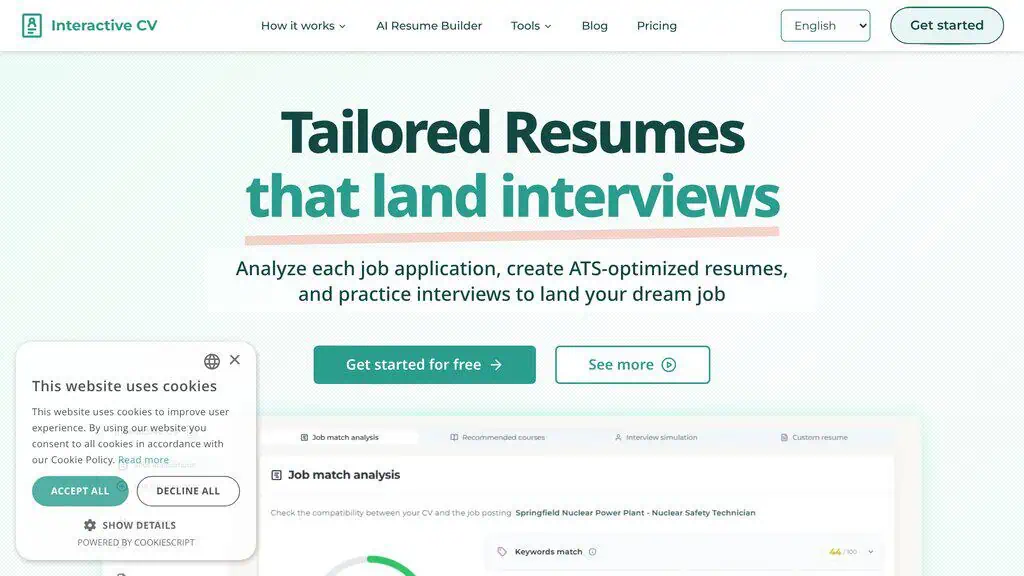
You paste a job posting URL, upload or build your resume in the editor, and get a compatibility score from 0 to 100 plus the keywords and skills you are missing for that role. You apply the suggestions with a click, export the PDF, and track the application on a built-in Kanban board (wishlist, applied, interview, offer, rejected). The biggest practical problem in a job search is not writing one good resume; it is writing twenty slightly different ones and remembering which version went where. Treating the search as a pipeline is the right framing.
You can paste a job description into ChatGPT or Claude and ask for a rewrite, and the writing quality will be excellent. What you do not get is the scoring, template rendering, application tracking, interview practice and shareable link in one place. If you only need writing help, a general AI is cheaper; if you want one organized workflow, the dedicated tool wins.
The CV link recruiters can question by chat or voice
The shareable interactive CV is the one feature I have not seen done this way anywhere else. You generate a link to your resume and send it to a recruiter, who can ask it questions through a built-in chat or by voice and get answers drawn from your experience.
A static PDF is a dead end. A recruiter reads it, has a question (“Did they manage a team or just contribute?”), and either guesses, moves on, or emails you and waits. If a product manager’s PDF says “led cross-functional launches,” the hiring manager can ask the link “which functions, and how big were the launches?” and get a specific answer at 11pm without scheduling a call. For designers, developers and anyone in tech or creative roles applying to modern startups, that is a smart differentiator. Whether recruiters click it at all is the catch, covered in the limitations below.
Resume tailoring and the 0 to 100 match score
The resume builder claims a tailored, ATS-ready CV in under 10 minutes. You enter your professional information, the AI compares your experience with the target role, and it offers one-click suggestions, including missing skills valued for that position. The editor lets you change any section in real time, so you keep control of what to highlight. Because the suggestions are tied to an actual job posting rather than a vague “make it better” prompt, they are relevant rather than generic. Output exports to PDF with unlimited edits. This is the strongest part of the platform.
The match score’s number is not the point; a “73” means nothing in isolation. The report is useful because it surfaces the gap between how you describe your experience and how the employer describes the role. If the posting says “stakeholder management” six times and your resume says “worked with teams,” the tool flags it. That mismatch quietly kills applications, and most people never see it because they send the same resume everywhere.
According to Jobscan, nearly all Fortune 500 companies use applicant tracking systems to filter resumes before a human reads them, so aligning your language with the job description does improve your odds. It does not mean a guaranteed pass, for reasons in the limitations section.
Interview simulator: rehearsal, not preparation
The simulator runs AI mock interviews with questions tailored to the actual role and gives real-time feedback on your answers. Interview anxiety is mostly a rehearsal problem: people freeze because they have never said their answers out loud under pressure, not because they lack them. For behavioral questions especially (“tell me about a time you handled conflict”), practicing the structure of an answer beforehand is worth more than most people assume. Use it to build fluency and calm your nerves, as a warm-up before a mock interview with an experienced human.
Cover letters, templates, tracking and translation
- Cover letters: The AI generates personalized, ATS-optimized cover letters tied to the job. Quality is good, on par with what you would get from prompting a general AI well. The free plan includes 5, which is plenty to test. If you want a free standalone alternative, our AI cover letter generator covers the basics with no signup.
- Templates: Six professional designs (Essential, Executive, Harvard, European, Corporate, Creative). The free plan gives you 4, PRO unlocks all 6. They are clean and recruiter-friendly, which matters because over-designed resumes confuse ATS parsers, but nothing you cannot find elsewhere.
- Application tracking (Kanban board): Jobs move across wishlist, applied, interview, offer and rejected columns. Simple, visual and useful for staying organized across dozens of applications.
- CV translation: Limited translation is included even on the free plan (2 translations), useful if you apply across countries.
None of these is a reason to buy on its own. Together they are why InteractiveCV works as one system instead of one more app you forget about.
InteractiveCV pricing: free plan vs $19 PRO
Verified from the official pricing page in June 2026:
| Feature | Free ($0) | PRO ($19/mo) |
|---|---|---|
| Resume job matching | 3 | Unlimited |
| Job-tailored resumes | 3 | Unlimited |
| Interview simulations | 3 | Unlimited |
| Cover letters | 5 | Unlimited |
| Job match suggestions | 5 | Unlimited |
| CV translation | 2 | Unlimited |
| CV tips & analysis | 2 per CV | Unlimited |
| Premium templates | 4 | 6 |
| Interactive CV (chat + voice) | Included | Included |
| CV export & shareable link | Included | Included |
| Support | Priority |
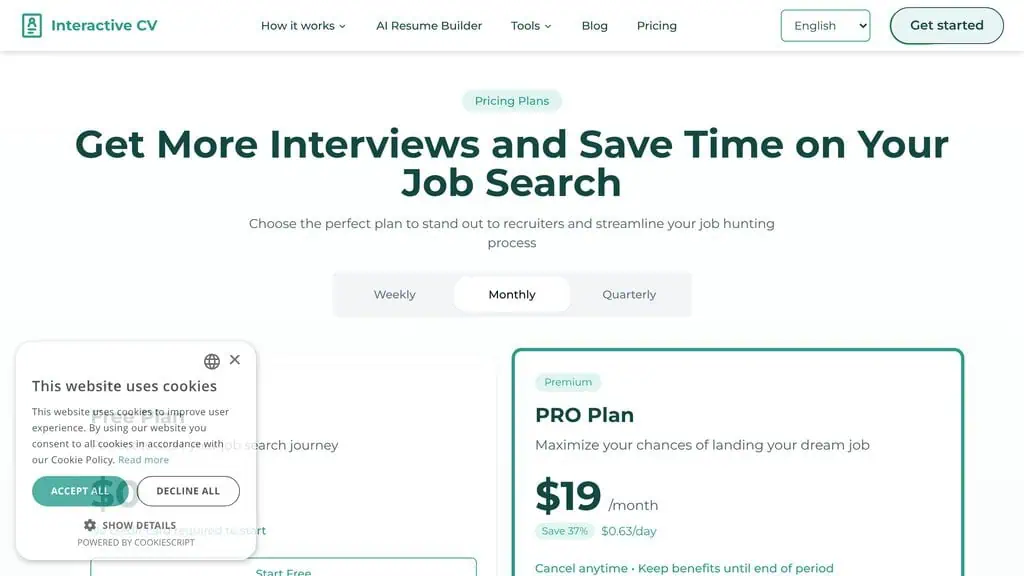
The free plan needs no credit card. The pricing page advertises a “Save 37%” promotion and offers weekly, monthly and quarterly billing, so the effective monthly rate drops on a longer term. There is no separate free trial because the free plan is the trial.
The free plan is the most generous in this category that I have seen. Many resume tools let you build a resume and then lock the download behind a paywall. InteractiveCV includes export, the shareable link and the interactive features for free.
Whether PRO is worth $19/month depends on your timeline. If you are applying to 10-plus jobs a month, unlimited tailored resumes and interview sims pay for themselves in time saved. If you apply to two or three jobs, the free plan covers you. Either way, this is a tool you cancel the day you are hired, so set a calendar reminder.
Enhancv, Rezi or Teal instead?
InteractiveCV’s edge in this field is breadth plus the interactive link, not any single best-in-class feature. Here is how it sits against the tools people actually ask me about.
| Tool | Starting paid price | Standout strength | Watch out for |
|---|---|---|---|
| InteractiveCV | $19/mo | Shareable chat/voice CV + all-in-one workflow | Interactive link adoption by recruiters |
| Enhancv | ~$25/mo | Best-looking templates, strong content tips | More design-focused than ATS-focused |
| Rezi | ~$29/mo | Hardcore ATS optimization | Plainer designs, narrower scope |
| Teal | Free + ~$29/mo | Excellent job tracker + Chrome extension | Resume builder is secondary to tracking |
If beating the ATS is your single biggest worry, Rezi is the specialist. If you want the best-designed document, Enhancv wins. If you capture most jobs from LinkedIn and company sites, Teal’s tracker and browser extension are better. If you want one tool that does most jobs reasonably well at a lower entry price than Enhancv or Rezi, plus the conversational CV link none of them has, InteractiveCV is the pick. For the wider landscape, see our roundup of the best AI writing tools, and browse current discounts on the AI deals hub.
What the score and the link cannot do for you
- The interactive link depends on recruiter behavior you cannot control. Most hiring still runs through ATS uploads, LinkedIn and emailed PDFs. Some recruiters will not know what to do with a chat-enabled link, and conservative industries (law, finance, government) will ignore it entirely. In modern tech and creative hiring some will use it; elsewhere it is a trick you use once. Buy for the resume engine, not this.
- ATS optimization is directional, not guaranteed. ATS systems vary widely, parsing rules differ, and no external tool can see inside a specific company’s configuration. Treat the compatibility score as a starting point, not a finish line.
- The score rewards keyword gaming. Because it rewards alignment, you can raise it by stuffing terms you barely have experience with. That gets you past the filter and into an interview you are not ready for, which is worse than a rejection. The tool will not stop you, so reframe real experience in the employer’s language and never invent qualifications.
- No browser extension. Teal captures jobs straight from LinkedIn or company sites with a Chrome extension. InteractiveCV makes you paste URLs manually, which adds friction at scale.
- Interview feedback has a ceiling. AI feedback cannot read the room, judge your tone the way a human would, or push back on a weak answer with the sharp follow-up a real hiring manager will. Acing the simulator does not mean acing the interview.
Who should pay, who should stay free, and who should skip
Pay for PRO if you are an active job seeker applying to many roles, especially in tech, design, startups or remote work. The all-in-one workflow saves real time, and at $19/month, cancellable the day you are hired, the math is easy if it shortens your search even slightly.
Stay on the free plan if you are a casual or passive job seeker. Three job matches, three tailored resumes and export at no cost cover an occasional application.
Skip it if you have one narrow need or work in a conservative industry. Rezi is more focused on ATS, Enhancv on design. Where the interactive link will never be opened, you are paying for a flagship feature you will not touch, and a free tool plus strong writing gets you most of the way.
Verdict: free plan now, PRO only while you are applying
InteractiveCV gets the fundamentals right: fast resume tailoring, useful job-match scoring, a respectable interview simulator and a free tier that includes export. What keeps it from an unconditional buy is that its most marketed feature, the interactive link, is the one most dependent on people you do not control. If recruiters in your field adopt it, it is a real edge. If they do not, you still have a competent, affordable all-in-one resume tool.
A resume tool’s job is to remove friction, not to do the thinking. InteractiveCV removes a lot of friction; what you accomplished and how to frame it honestly is still yours. Run the free plan this week on the one job you most want, see whether the suggestions sharpen your resume, and let that single test decide whether $19 is worth it. For more verdicts like this, browse our AI tool reviews or subscribe for weekly picks.
Related Posts

I tested AgainstData on 355 pages of Gmail data. Bulk unsubscribe, personal data deletion requests, pricing, and whether...
AI-Text-Humanizer.com took a 132-word ChatGPT paragraph from 100% AI to 0% on ZeroGPT but flattens your voice. Buy the $...
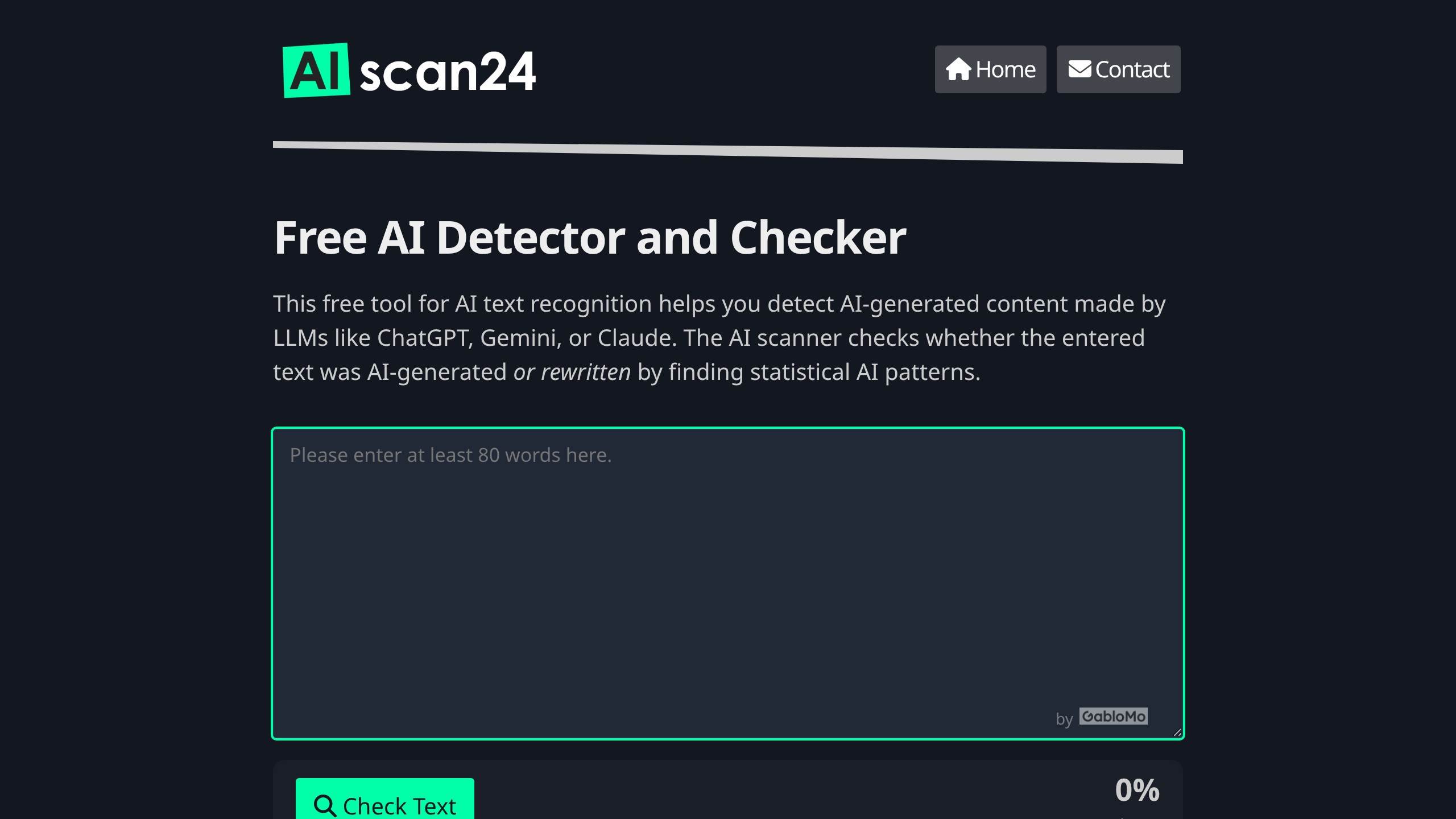
AIscan24 is a free, no-signup AI detector: it caught pure ChatGPT text at 100% but scored my handwritten paragraph 80%. ...
Honest Aithenticate review after hands-on testing. Does this AI disclosure badge tool meet EU AI Act requirements? Prici...

My hands-on Answer Socrates review covering all features, free plan limits, pricing, and how it compares to AlsoAsked. I...
I’ve spent $4,200 on 118 AppSumo lifetime deals over 5 years. Here’s my honest review: what works, what fails, and wheth...