

AI bots do not replace jobs in most cases. They replace the repetitive steps inside jobs.
That is the accurate answer to “how is AI bot technology changing the digital world.” Where they win consistently is high-volume customer support triage, personalisation from behavioural data, and internal automation of data entry and scheduling. Where they still fail is anything requiring human judgement, brand voice, emotional read, or accountability for a wrong output.
The opponent this post argues against is the frame that AI bots are transforming everything at once. They are transforming specific steps, unevenly, and the interesting question is which ones.
What an AI bot actually is
An AI bot is software that uses machine learning and natural-language processing to carry out automated tasks and simulate conversations. Unlike a rule-based script, an AI bot updates its behaviour from data.
The category covers chatbots, virtual assistants (Siri, Alexa, Google Assistant), social media bots, trading bots, and healthcare bots.
All of them share the same core operations:
- Interpret input.
- Retrieve or generate a response.
- Take an action.
The design property that matters commercially:
- Bots run 24/7
- They process input in parallel
- They handle thousands of interactions concurrently
That is where the cost math bends in their favour. It is also where the failure mode sits, because a single bad prompt scales the same way.
Where bots are actually winning in business
Customer service triage. Instant answers to common questions. Escalation to a human on anything ambiguous.
Reduced wait times, lower operational cost per contact, consistent responses across shifts. The revenue impact shows up in support-cost lines, not top-line growth. Best done as a filter layer on top of a real support team, not as a full replacement.
Personalisation from behavioural data. Streaming recommendations from viewing history. Product recommendations from purchase patterns.
Newsfeed ordering from engagement. This is the segment where AI has been mainstream longest, and it is where “AI bot technology” has been quietly running for over a decade before the current wave.
Automation of repetitive knowledge work. Data entry, appointment scheduling, email triage, inventory reconciliation, invoice processing, lead qualification. The mundane wins are the ones that pay for the whole AI budget. The impressive-sounding autonomous agents on stage are the ones that do not survive contact with a real client account.
E-commerce is the most mature commercial vertical
Shopping assistants find products, compare prices across stores, learn preferences over time. Order-tracking bots handle “where is my package” without escalation.
Returns and refunds get processed via chat instead of email queues. Recommendations lift average order value. For the buyer-side breakdown, AI shopping assistant guide covers what the general-purpose AI shopping tools actually do well.
Fraud detection is the quiet e-commerce win. Bots watch transaction patterns in real time and flag suspicious activity faster than any manual review can. The false-positive rate is real (legitimate customers get blocked) but the reduction in chargeback loss usually offsets it at scale.
Healthcare is slower and more consequential
Virtual health assistants schedule appointments, remind patients about medications, answer administrative questions, and monitor symptoms. Mental-health bots provide accessible first-line support. None of that is diagnostic work. It is administrative work that used to consume clinician time.
Where AI genuinely helps clinicians is data analysis:
- Scanning imaging for patterns
- Cross-referencing records
- Surfacing candidates for review
The clinician still makes the call.
The bot narrows the search space. Telemedicine networks use bots to gather pre-consultation data so the human appointment starts with context. Recruitment inside health-tech specifically now uses AI hiring assistants like RecruitCRM - AI chatbot hiring assistant to source and screen specialised candidates, which sits adjacent to the clinical use cases.
Digital marketing is where every claim needs the receipt check
Content recommendations from browsing behaviour. Social scheduling and comment triage.
Ad targeting on demographics and interests. The claims are real but the outcomes are uneven, and the strongest AI-marketing wins in practice are workflow-level (a person applying a general model to a specific job), not product-level (buying a “marketing AI” platform). The AI marketing on Reddit analysis found practitioners overwhelmingly recommend general models plus automation platforms, not purpose-built AI marketing products.
Education, financial services, and cybersecurity get the same treatment
Education bots handle personalised learning paths, instant Q&A, and administrative scheduling. The tutoring layer sits on top of curriculum, not in place of it.
Financial-services bots run balance checks, transfers, loan applications, lost-card reports, and light financial advice. Fraud-prevention bots monitor for anomalies in real time.
Trading bots execute strategy-based transactions. The autonomy question is the same as everywhere else: promise less autonomy, keep humans in the loop for the consequential calls.
Cybersecurity bots detect suspicious network activity, identify malware, flag phishing attempts, and monitor for known vulnerabilities. Their advantage over signature-based tools is that they update from data continuously, but the failure mode is the same as any ML system: they miss novel attacks the training set does not contain. See how hackers use AI for the other side of the same coin.
The trade-offs nobody sells you on
Privacy and data security. Bots run on the data they collect. Every conversation is a record. Storage, encryption, and access control are the real questions, and they show up in incident reports rather than product demos.
Job displacement is not evenly distributed. Repetitive administrative work compresses. Judgement-heavy work is largely unaffected. Which jobs actually go away is covered in more detail in what jobs are safe from AI.
Emotional flatness. AI bots do not read tone reliably. When a customer is genuinely distressed, an over-cheerful bot response is worse than a slow human one. Escalation triggers matter more than the bot’s own conversational polish.
Bias and hallucination. Bots trained on skewed data produce skewed output. Bots asked to answer confidently about things they do not know will invent an answer. Both problems are engineering problems with imperfect solutions, not features that get fixed by the next model release.
Where AI bot technology is actually going
The near-term direction is not “smarter chatbots.” It is deeper integration with existing systems: IoT sensors that feed bots operational context, workflow platforms that give bots the ability to actually take actions on real systems, and audit layers that log what the bot did and why.
The businesses that get value from AI bots in the next three years will be the ones that pick two or three specific workflows, wire bots into them properly, keep humans in the loop for anything customer-facing, and measure the metric they had before the bot ran. Not tokens saved.
Not conversations handled. The real business metric.
For the tools that make this practical, best AI tools is the vetted list, and for the mechanics under the hood, how AI search engines work covers the retrieval-and-action loop that modern bots run on.
Related Posts
Agentic AI pentesting tools replay the original exploit after a patch ships, then try mutated payloads. Eight platforms ...

AI adoption statistics, sourced: 78% of companies say they use AI and only 21% have redesigned a workflow. Here is the h...

A free, cited AI glossary covering 264 machine learning and generative AI terms, with plain-English definitions and cros...
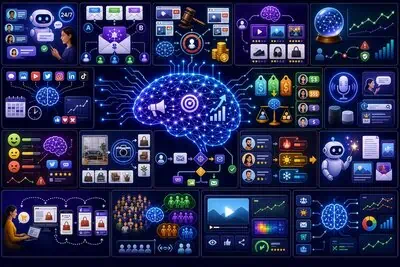
Real examples of artificial intelligence in digital marketing across content, SEO, ads, email and analytics, with what e...
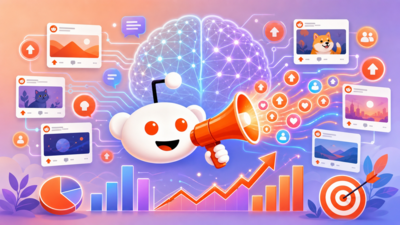
AI marketing on Reddit: I pulled 239 threads across 7 subreddits. Marketers use AI daily and mostly dislike the products...
The AI prompt manager I built for Chrome and Firefox: save, tag, version and export your prompts locally. Free, no accou...